
Sex without Penetration: Is there "sex without having sex"?
In popular culture and films, "real sex" is often viewed in a singular way: it's all about penetration. But human sexuality is far more complex and nuanced than that. The question "Can you have sex without having sex?" arises more often than one might think – both among young people exploring their boundaries and among couples seeking new avenues to intimacy.
The answer is a resounding yes. Sexuality is about desire, pleasure, and connection, and it doesn't necessarily require one specific physical act to count as sex.
What actually defines sex?
From a narrow biological perspective, sex is often associated with reproduction and thus penetration. But in modern sexology, sex is defined much more broadly. Here, sex is considered any activity that involves sexual stimulation, creates arousal, or deep physical and emotional intimacy.
This spectrum includes everything from intense kissing and caressing to oral sex, manual stimulation, or the use of sex toys. For many, sexuality is just as much about the chemical connection and the vulnerable exchange between two people as it is about the physical release itself.
Why choose intimacy without penetration?
There can be countless reasons why one chooses – or needs – alternatives to traditional intercourse:
-
Physical well-being and health: Some women experience pain during penetration (e.g., due to endometriosis or vaginal dryness). Here, focusing on other erogenous zones is a fantastic way to maintain desire and pleasure without discomfort.
-
Exploration at your own pace: For many couples, "outcourse" (sex without penetration) is a safe way to build trust and get to know their partner's body before potentially taking the next step.
-
Hormonal connection: Touch and skin-to-skin contact release oxytocin (the love hormone) and dopamine. These hormones create bonding and feelings of happiness, regardless of whether penetration is involved.
-
Cycle and contraception: Some choose to avoid penetration during certain periods of their cycle or for personal and cultural reasons.
Pleasure and safety with Femi.Eko
At Femi.Eko, we believe that the key to good sexuality is knowing your own body and feeling safe in it. Intimacy requires being present in the moment – and that's difficult if you feel uncomfortable.
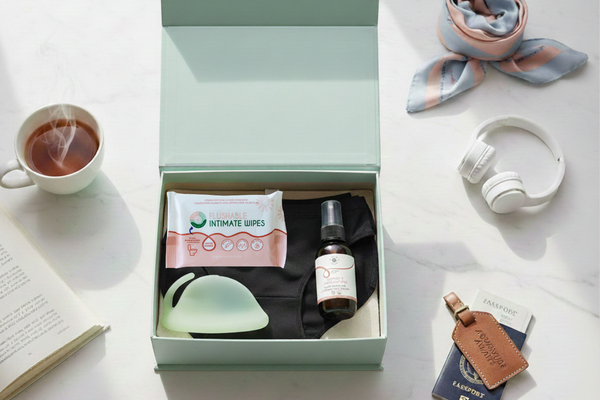
No matter how you express your sexuality, your intimate health is a top priority. Our products are designed to support your body through all cycles, so you always feel fresh and confident. When you have peace of mind about your body's natural functions, it becomes easier to let go and explore pleasure – with or without penetration.
Communication: The most important foreplay
Regardless of the type of sex preferred, consent and communication are the most important ingredients. Being able to say "I don't feel like penetration today, but I would really like to feel your body close to mine" is a sign of healthy and mature sexuality.
Boundaries are not an obstacle to pleasure; they are the framework that makes it safe to enjoy. By talking openly about desires and preferences, couples can often achieve a much higher degree of sexual satisfaction because the focus shifts from "performance" to a shared experience of intimacy.
About the author: Narcisa Christiansen is an expert in women's health and the founder of Femi.Eko. With a holistic approach to sexuality and body awareness, Narcisa works to empower women's right to own their pleasure. Through Femi.Eko, she combines sustainable solutions with important knowledge that helps women navigate everything from menstruation to intimate well-being and sexual health.